(Photo by Richard Price)
jamesworrad.blogspot.com
Tuesday, 5 May 2015
Writers are not in the business of fear
Here's some righteously frustrated Storified words of wisdom from writer Alyssa Wong about orientalism when western authors write Asian characters, especially women.
Now, being very visually anglo saxon and X-chrome inclined, I'm far from the epicentre of this but even I'm nauseated by this sort of stereotypical depictionizing (yes, that is a proper word. Stop challenging me, dammit). It's offensive, of course, even when unintentional, but it's also extremely lazy. You know: sloppy writing.
The problem I find, as far as my reading goes, can be summed up by Charles Bukowski (of all people):
Is there a solution? I like to think so, and the first step involves casting away fear at all costs. Bravery is knowing the exact capabilities of a machine gun post and charging at it anyway.
But doing so intelligently. With caution and respect. Researching, asking experts on the ground. The sort of things you as an author should be doing about everything you write about anyway (Trust me, I'm not just mouthing off here. I've just spent the last two hours reading about dragonfly brains for something I may well not write anyhow). You may well fail, perhaps you've even set yourself up in a tactical position where no other outcome is possible. But at the very least it will be a noble failure. As Tacitus said:
So caution, patience: yes. Fear: no. We're writers, speculative fiction writers, no less. We didn't get in this game to avoid risk.
And, er, that's all I've got to say, really.
Now, being very visually anglo saxon and X-chrome inclined, I'm far from the epicentre of this but even I'm nauseated by this sort of stereotypical depictionizing (yes, that is a proper word. Stop challenging me, dammit). It's offensive, of course, even when unintentional, but it's also extremely lazy. You know: sloppy writing.
The problem I find, as far as my reading goes, can be summed up by Charles Bukowski (of all people):
“The problem with the world is that the intelligent people are full of doubts, while the stupid ones are full of confidence.”By which I mean, the non-minority authors who might best challenge, invert and, ideally, help to destroy identity stereotypes are often too scared, too well-meaning and too big hearted to go anywhere near the zone, while the idiots are gonna moonwalk backwards all over it whilst singing their heads off, treading on land mines and human casualties alike.
Is there a solution? I like to think so, and the first step involves casting away fear at all costs. Bravery is knowing the exact capabilities of a machine gun post and charging at it anyway.
But doing so intelligently. With caution and respect. Researching, asking experts on the ground. The sort of things you as an author should be doing about everything you write about anyway (Trust me, I'm not just mouthing off here. I've just spent the last two hours reading about dragonfly brains for something I may well not write anyhow). You may well fail, perhaps you've even set yourself up in a tactical position where no other outcome is possible. But at the very least it will be a noble failure. As Tacitus said:
"The desire for safety stands against every great and noble enterprise."
So caution, patience: yes. Fear: no. We're writers, speculative fiction writers, no less. We didn't get in this game to avoid risk.
And, er, that's all I've got to say, really.
Monday, 4 May 2015
Sunday, 3 May 2015
Friday, 1 May 2015
“Shall the common man be pushed back into the mud, or shall he not? I myself believe, perhaps on insufficient grounds, that the common man will win his fight sooner or later, but I want it to be sooner and not later—some time within the next hundred years, say, and not some time within the next ten thousand years."
-George Orwell, Homage To Catalonia
Tuesday, 28 April 2015
"Yes, there's a lot that's fascinating about Alexander the Great, Hannibal, Julius Caesar, Augustus, etc. But I find the notion that the wars they fought always have to feature them as central characters—as if it's all really about them—unfortunate. I'm as interested in the lives of the unnamed masses who lived and died through those same conflicts: foot soldiers, noncombatants, slaves, women, children, the elderly. Any of the conflicts those famous men led involved countless others. I'd welcome more stories about those people. They deserve them."
-David Anthony Durham
Monday, 27 April 2015
Are You Ready To Enter Stapledon-Woolf Space?
(This article first appeared on Damien Walter's blog back in 2010. Thought it'd be nice to necromancy it up given A): I haven't had much chance to do a serious, essayish post in a while, and B): it's hopefully quite interesting. Enjoy...)
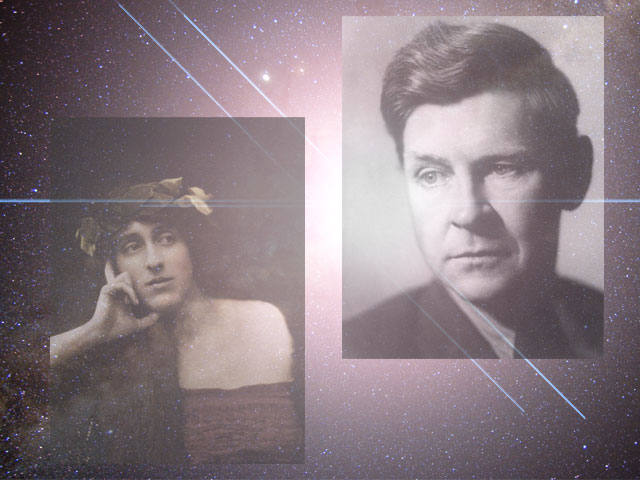
Please indulge me. I have identified a literary element, a meme-state if you will, which I hope will be of some small use to anyone grafting away at space opera. I call it Stapledon-Woolf space.
![]() |
| Picture by Damien Walter |
I’m sure you’ll recognise the surnames. Olaf Stapledon, of course, wrote First and Last Men and Star Maker. I use his name in reference to his penchant for scale–has anyone ever daubed tales upon a larger canvas than this man, in terms of time and space? Millennia pass within a sentence, races rise on page forty-eight and are rendered extinct halfway down page fifty.
I open Star Maker at random to read:
‘The great majority of the stellar population had now passed their prime; multitudes were mere glowing coals or lightless ash.’As someone once put it, Stapledon is a writer who can’t write about anything unless it’s everything.
At the very other end of the scale game we might usefully identify Virginia Woolf. Her stream-of-consciousness style and innate hypersensitivity capture the least moment and the smallest detail:
‘With a painful effort of concentration, she focused her mind… upon a kitchen table, one of those scrubbed board tables, grained and knotted, whose virtue seems to have been laid bare by years of muscular integrity…’Stapledon-Woolf space is a fiction-state in which the scale characteristics of both these writers exist simultaneously. Or, more simply, a single sentence in which galactic grandeur is meshed with some small matter, something human and intimate. An example, off the top of my head, might be-
‘He recognised the scent upon her, a perfume distilled from the flowers of a hundred worlds.’
A crude example, but I hope it illustrates what I’m driving at.
There’s better, of course. Iain M Banks’ culture novel, Surface Detail, describes a massacre of sentient star ships:
‘…collapsing into particles more dense than neutron star material, all that prized wit, intelligence and knowledge-beyond-measuring snuffed…to a barely visible ultra-dense cinder almost before they had time to realise what was happening to them.’Banks' canon is rich with SWS. On the other hand, I skimmed through Cordwainer Smith’s Instrumentality stories thinking they’d be drenched in Stapledon-Woolfe sentences and found none. The Ballad of Lost C’Mell, for instance, has its share of epic imagery and more human detail than many ‘literary’ stories, yet the two extremes never bind together in a single sentence. As with many space opera tales, there’s only a background radiation of proto-SWS. Still, doesn’t stop C’Mell from being a favourite of mine.
So far I’ve found three properties to Stapledon-Woolfe space-
- It is inherently complex.
- It is inherently unstable.
- It is unique to space opera.
As for 2), a state of pure SWS cannot be maintained for long within a narrative. A sentence or a short paragraph at most. Firstly, the Stapledonian and Woolfian elements pull in opposite directions. But, more to the point, the story itself will curtail SWS before too long. It has to, or the plot would lose all momentum and die.
3)- is contentious, I’ll admit. But I’m sticking with it. No other subgenre has the requisite colossal dimensions Space Opera possesses to tolerate such extremes. The stars above in epic fantasy can only ever be cosmetic, something for the characters to gaze at in wonder but never comprehend, never approach. And Earth-bound Hard SF, in my experience, rarely concerns itself with the personal for long or at depth.
So how, as SF writers, is this of any use to us? Well, in my opinion, the fusion of Stapledon-Woolfe space creates a charge, a buzz of textual energy the reader cannot help but feel, if only subconsciously.
This Stapledon-Woolfe energy is a bit beyond my ability to explain, I’m afraid. All I know is I get a tingle upon reading it. A unique one at that, a sort of gut feeling within the brain. Maybe it’s in having the human condition framed by the very stars themselves, a view to how utterly microscopic yet inexplicably vital we are. As Olaf himself put it in Star Maker’s appendices:
‘A living man is worth more than a lifeless galaxy. But immensity has indirect importance through its facilitation of mental richness and diversity.’A final note of caution. No writer should intentionally create sentences chock-full of SWS. That would be artificial and could only make for artificial writing. The key is in editing. A few – a very few – sentences of a first draft will naturally contain Stapledon-Woolf particles in an unrefined state. So edit and identify them. Refine and enrich them. Have fun. Who says outer and inner space are mutually incompatible?
Friday, 24 April 2015
Our silence roars volumes.
Here's the Story of an all-female squad on a rescue mission, all under fire from ISIS.
Increasingly, it's something that's confusing me: here's a left wing feminist volunteer army going up against a battle hardened, ludicrously misogynist and racist force (and winning) and yet none of the feminist leading lights on my Twitter feed ever mention it. Not a dicky bird. Sorry, but... I find that shameful.
Perhaps some of the reason is Western intervention in the area before, Bush/Blair etc. No one wants to be seen as pro-invasion, even after the fact. But I think that's a superficial connection at best.
Or maybe our media has no interest in showing a different kind of Middle East, a socialist, feminist Mid-East. Doesn't fit the narrative.
I prefer to believe the latter, because the former seems facile at best.All we progressives, we toters of blogs and tumblrs and tweets can challenge that status quo, we can bring focus. A fourth wave feminism may well be rising from Sinjar's dust, from the will to face bullets for a principal, for the life and dignity of innocents.
These Kurdish women deserve our support and the mass focus of our voices. God knows, the vile bigotries of their enemies are pretty intersectional.
Increasingly, it's something that's confusing me: here's a left wing feminist volunteer army going up against a battle hardened, ludicrously misogynist and racist force (and winning) and yet none of the feminist leading lights on my Twitter feed ever mention it. Not a dicky bird. Sorry, but... I find that shameful.
Perhaps some of the reason is Western intervention in the area before, Bush/Blair etc. No one wants to be seen as pro-invasion, even after the fact. But I think that's a superficial connection at best.
Or maybe our media has no interest in showing a different kind of Middle East, a socialist, feminist Mid-East. Doesn't fit the narrative.
I prefer to believe the latter, because the former seems facile at best.All we progressives, we toters of blogs and tumblrs and tweets can challenge that status quo, we can bring focus. A fourth wave feminism may well be rising from Sinjar's dust, from the will to face bullets for a principal, for the life and dignity of innocents.
These Kurdish women deserve our support and the mass focus of our voices. God knows, the vile bigotries of their enemies are pretty intersectional.
Subscribe to:
Posts (Atom)